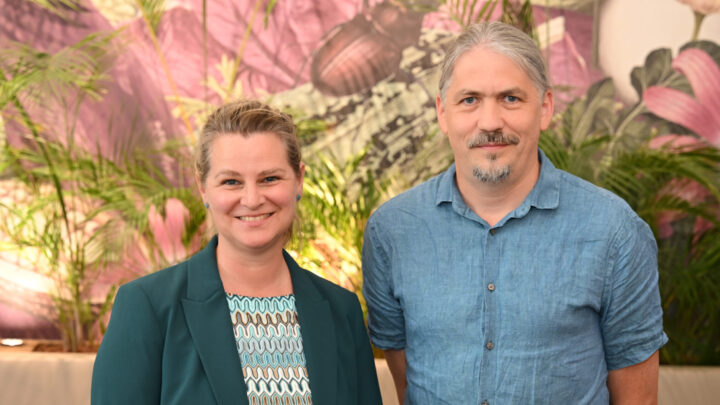
Through the WE&ME Award, we are partnering with the FWF to support groundbreaking research on ME/CFS—here we present the first winning project.
Genetic Endotypes in ME/CFS: Gaining a Better Understanding of Disease Mechanisms
Project Manager

Matthias Wielscher, Principal Investigator/Researcher
Medical University of Vienna; Center for Public Health; Department of Epidemiology
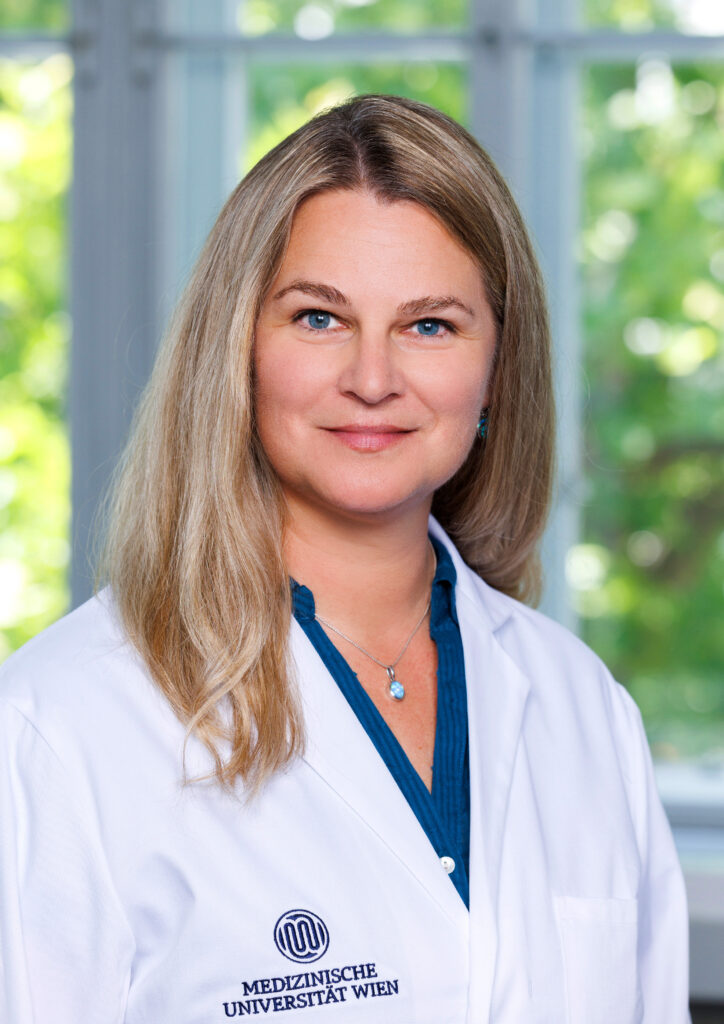
Prof. Kathryn Hoffmann, Co-Principal Investigator
Medical University of Vienna; Center for Public Health; Department of Primary Care Medicine
Organizing Institution: Medical University of Vienna; Center for Public Health; Department of Epidemiology
Collaboration Partner: Prof. Chris Ponting, University of Edinburgh, Institute of Genetics and Cancer
Project start date: September 1 , 2026
Project duration: 4 years
Project Summary:
ME/CFS is a highly heterogeneous condition. Those affected differ not only in their symptoms but likely also in the biological mechanisms underlying their condition. However, when all patients are studied together, these differences are masked. This makes it more difficult to identify genetic causes and develop new therapeutic approaches.
In this project, we aim to identify and better understand the biological subgroups of ME/CFS. Our central hypothesis is that the disease can be divided into several biologically distinct forms based on different pathogenic mechanisms.
To this end, we are pursuing two complementary approaches. In the first, we analyze clinical data from patient cohorts—including symptoms, comorbidities, and questionnaire data—to identify patients with similar disease courses.
In the second approach, we use genetic data. Instead of looking at individual genes, we combine many genetic variants into genetic mechanism scores. These describe the genetic influence on biological processes such as inflammatory responses, autoimmunity, and disorders of energy production or the intestinal barrier. In this way, we aim to create an individualized biological profile for each patient and derive genetically defined subgroups from it.
We will then compare the two approaches. If the clinical and genetic subgroups match, this would be a strong indication that they do indeed reflect different disease mechanisms.
Finally, we will examine these subgroups in the world’s largest genetic dataset for ME/CFS (DecodeME) and conduct genome-wide analyses once again. We expect this to reveal genetic associations that have so far remained hidden due to the high degree of heterogeneity. In the long term, this could contribute to more precise diagnostics and provide new avenues for targeted therapies or the repurposing of already approved medications.
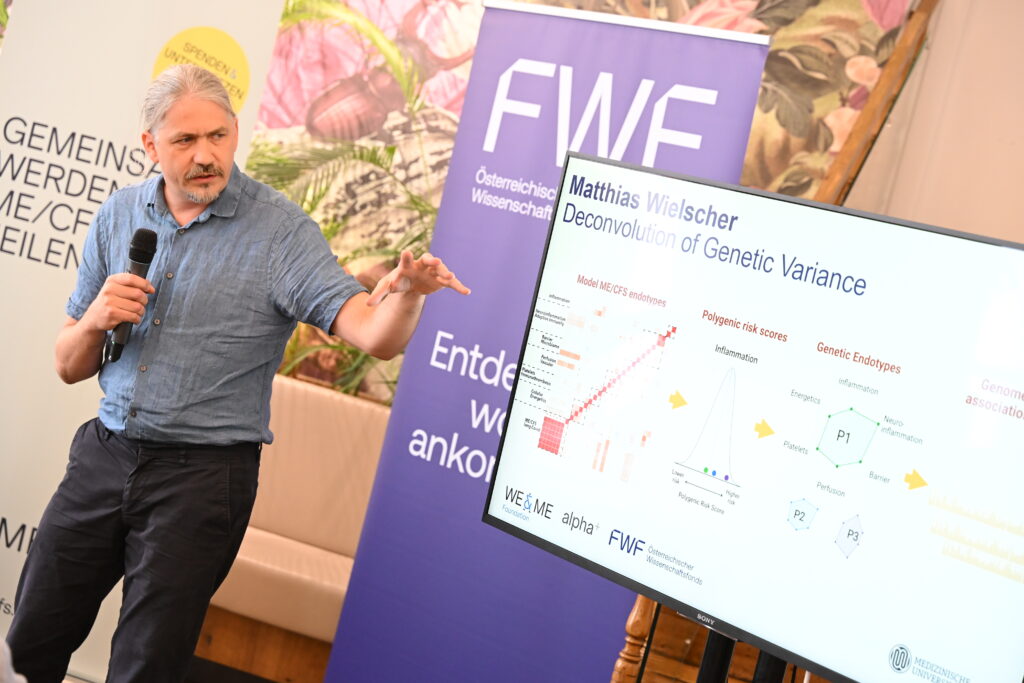
Photo: Christian Jobst
This project received the WE&ME Award and is fully funded by the WE&ME Foundation.
The WE&ME Award was created through a collaboration between the WE&ME Foundation and the FWF (Austrian Science Fund) to support outstanding research in the field of ME/CFS. This project was selected through the application process and will now receive funding as part of the award.