Funded as part of the ME/CFS Consolidation Call 2026
REVEAL-ME
Rare Variants, and Epigenomic Analysis in ME/CFS
Is a rare genetic cause behind ME/CFS in some patients?
The REVEAL-ME research project (Rare Variant and Epigenomic Analysis in ME/CFS) at the Medical University of Vienna is running a large ME/CFS study to find out whether rare genetic changes contribute to the illness in some patients, or whether some of them may have a previously unrecognised genetic condition that causes symptoms overlapping with ME/CFS. The project is led by Matthias Wielscher together with Kathryn Hoffmann and funded by the Vienna Science and Technology Fund (WWTF) and the WE&ME Foundation.
Building an Austrian ME/CFS research cohort
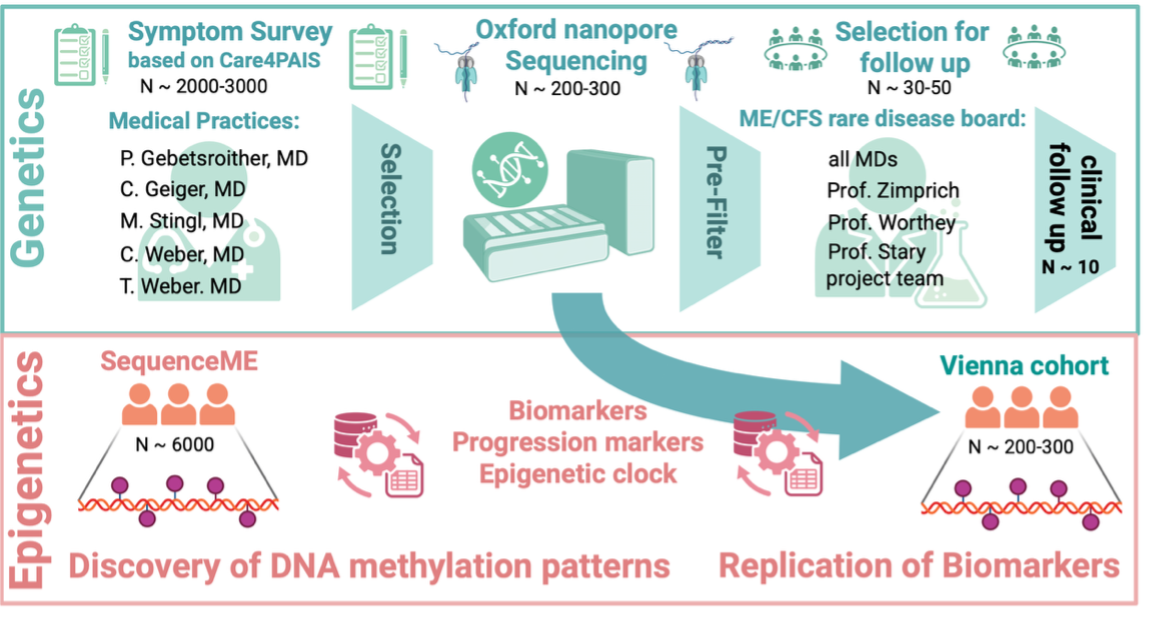
A central part of the project is building a nationwide ME/CFS and long COVID research cohort in Austria, with medical oversight throughout. Working with specialist doctors, the team aims to enrol around 2,000 patients and healthy controls in the study.
Participants complete detailed online questionnaires about their symptoms, the course of their illness, other conditions, possible triggers and illnesses in the family. This information allows a detailed picture of each patient and should help researchers better understand the different ways the illness progresses and identify possible patient subgroups.
People can take part from home, which makes it easier for those who are severely ill. If needed, family members or carers can help fill in the questionnaires or complete them on the patient’s behalf.
Identifying rare genetic conditions
From the cohort, around 200 to 300 people will be selected for whole genome sequencing. Priority goes to patients whose medical history, symptoms or other conditions suggest a possible genetic cause.
Using modern Oxford Nanopore sequencing, the researchers will examine each person’s entire genome. The key question is whether some patients carry rare genetic changes that contribute to their symptoms or point to a genetic condition that has so far gone unrecognised.
To assess these findings, an interdisciplinary ME/CFS Rare Disease Board is being set up at the Medical University of Vienna. Experts in ME/CFS research, neurology, human genetics and rare disease research will review notable genetic variants together. If the results point to a medically relevant genetic condition, further diagnostic tests can be arranged through the patient’s own doctors.
Building an Austrian ME/CFS research cohort
The genome data will also be used to study DNA methylation. This chemical modification can affect how genes are regulated without changing the DNA sequence itself. Working with the internationalSequenceME project, the researchers want to find out whether ME/CFS is linked to characteristic DNA methylation patterns and whether these can be confirmed in the independent Austrian cohort.
The long term aim of the study
REVEAL-ME aims to improve our understanding of the genetic basis of ME/CFS and the different mechanisms behind the illness. At the same time, close collaboration between researchers, specialist doctors and patients is meant to build a lasting research infrastructure in Austria, one that supports future studies and the development of more targeted diagnosis and treatment.

MATTHIAS WIELSCHER
Principal Investigator/Researcher
Medical University of Vienna: Center for Public Health; Department of Epidemiology
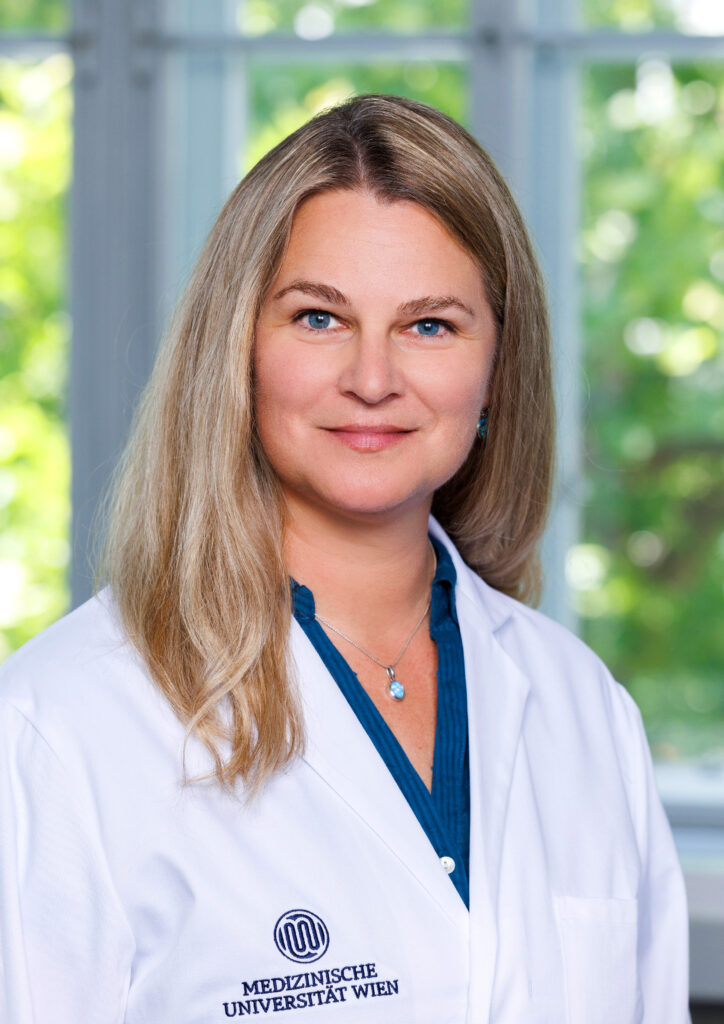
PROF. KATHRYN HOFFMANN
Co-Principal Investigator
Medical University of Vienna: Center for Public Health; Department of Primary Care Medicine
Learn more about the project on the WWTF website: Rare Variant and Epigenomic Analysis in ME/CFS
Other projects by Matthias Wielscher.